Foreign Funds Buy Korean Chips 4 Days Straight as Kospi Tops 7,000
Foreign investors just bought Korean stocks for a fourth straight trading session, net purchasing 612.1 billion won on July 23 and pushing their four-day total to roughly 4.07 trillion won (about $2.9 billion) — a buying streak that helped drive the Kospi back above the 7,000 level for the first time in days.
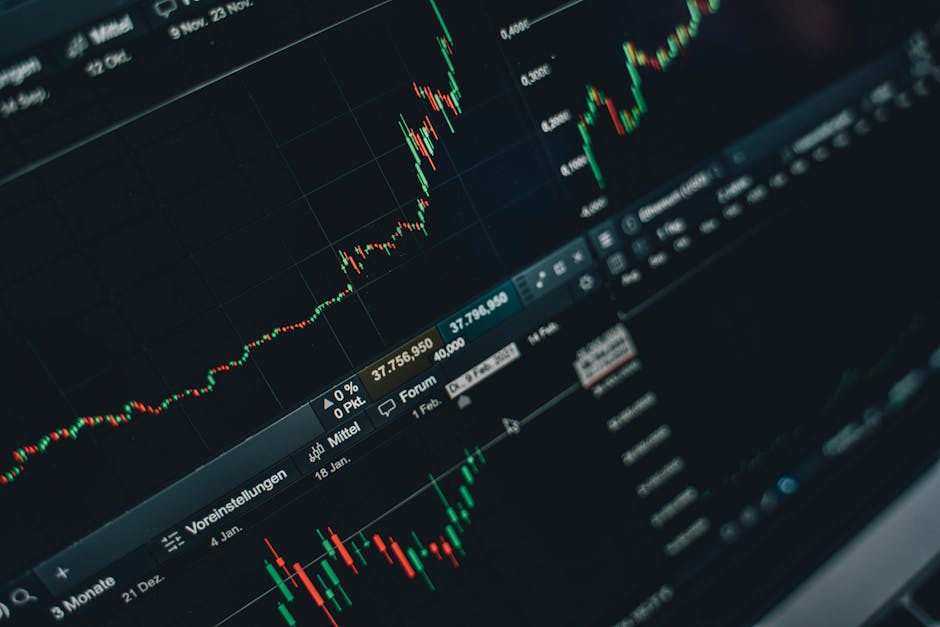
Photo by Alesia Kozik on Pexels
What Happened
The Kospi opened up 2.59% at 6,974.05 and cleared 7,000 within minutes of the open, extending what was already a third straight session of gains before the foreign flow data confirmed a fourth consecutive day of net buying. Samsung Electronics jumped as much as 4.03% to 271,000 won intraday before settling near 272,250 won (+3.74%), while SK hynix rose as much as 4.86% to 1,919,000 won. Samsung Electro-Mechanics outperformed both, up 7.66%. Individual investors sold a net 592.4 billion won and institutions were modest net sellers, meaning the entire rally was foreign-fund-driven.
Why It Matters
A single day of foreign buying is noise. Four in a row is a signal. The trigger was Alphabet raising its annual capex outlook to a range of $195 billion to $205 billion after beating Q2 estimates — the same catalyst I covered in Alphabet's Capex Shock Sends Samsung, SK Hynix Up 2% Premarket. What's changed since that initial premarket pop is durability: this isn't a one-session relief bounce, it's four straight sessions of foreign capital rotating back into the exact stocks that supply the memory chips powering AI data centers. That's the same dynamic behind 'Thank You Alphabet': Kospi Reclaims 7,000 as Chip Stocks Surge, except now there's a multi-day flow pattern backing it up rather than a single headline print.

Who's Affected
Samsung Electronics and SK hynix are the direct beneficiaries — both are top-two suppliers of the high-bandwidth memory (HBM) that feeds Nvidia and AMD accelerators, and both are now trading with renewed momentum after chip "peak-out" fears had weighed on the sector. For U.S. investors, the read-through runs to Micron Technology, the only major U.S.-listed pure-play memory maker competing directly with Samsung and SK hynix in HBM. Sustained foreign conviction in the Korean memory names typically tracks with sentiment toward the broader AI memory supply chain — including Micron, and by extension chip-equipment and AI-infrastructure names tied to the same capex cycle. The combined 2026 capex plans now disclosed by Alphabet, Amazon, Microsoft, and Meta exceed $700 billion, and that spending has to land somewhere in the memory and compute supply chain.
What to Watch Next
Watch whether the foreign buying streak extends to a fifth session or stalls — a reversal would suggest this was a capex-headline trade rather than a structural re-rating. Also watch Micron's next earnings print and HBM order commentary for confirmation that the demand story Alphabet's guidance implies is actually flowing through to U.S.-listed memory exposure, not just Korean shares. Oil prices and Middle East headlines remain a wildcard that could offset chip-sector optimism, as they did in earlier sessions this month.
This is not financial advice — always do your own research before making investment decisions.
The takeaway: a four-day foreign buying streak is more meaningful than any single day's headline number, but it's still a sentiment shift tied to one capex guidance raise — not proof that the AI memory demand cycle is fully de-risked.


댓글
댓글 쓰기