Google's Frozen v2 Chip Jump: The Trade-Off Nobody's Pricing In
Alphabet shares jumped as much as 3.7% on Monday after The Information reported that Google is building a new server chip, internally called "Frozen v2," designed specifically to run its Gemini AI models far more efficiently — but the same design choice that makes the chip powerful is also what could make it obsolete before it ever ships.
What happened
According to the report, confirmed by CNBC and Bloomberg, Google engineers are working on a chip that would permanently bake parts of Gemini's architecture directly into the silicon. That "hardwiring" approach could let the chip serve six to ten times more tokens per unit of power than Google's current-generation TPUs, according to people familiar with the project. Unlike Google's general-purpose Tensor Processing Units, Frozen v2 is reportedly being built exclusively for Gemini, cutting down on the computation and data movement needed to answer a query. Google is targeting a possible launch around 2028.
Why it matters
The strategic driver is capacity, not just speed. Google Cloud has reportedly had to turn away customers because of an internal shortage of AI computing power, and Frozen v2 is one lever meant to ease that strain. That's a big deal for a company whose cloud unit is racing Microsoft and Amazon for enterprise AI workloads. It's also the latest data point in the theme I covered in Alphabet Pops as "Frozen v2" Chip Report Ups the Ante on Nvidia: custom silicon is now a core part of the bull case for Alphabet, not a side project. Google, Amazon, and Microsoft are all trying to reduce their dependence on Nvidia GPUs by designing chips tuned to their own models, and a 6-10x efficiency claim — even if unproven at scale — is exactly the kind of headline that keeps that narrative alive.

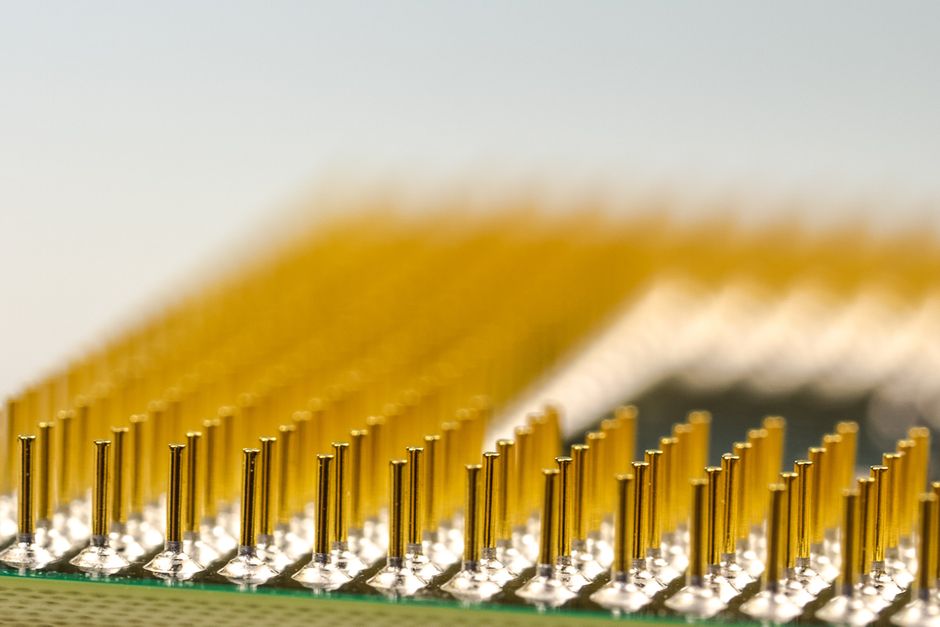
Photo by Quanlecntt2004 on Pixabay
Who's affected — and the catch
The most direct beneficiary on the supply side is Broadcom, Google's longtime TPU design partner under a long-term agreement that reportedly runs through 2031 and covers networking components for Google's AI racks. Broadcom shares climbed roughly 4% in premarket trading when that broader Google deal was disclosed, per Investing.com. But the relationship isn't as clean as it looks. Reports have also surfaced that Google's next data-center inference chip, TPUv9 ("Triggerfish"), may be co-designed with MediaTek instead, and Wedbush estimates Broadcom's share of Google's TPU silicon could slide from around 95% today to roughly 65% within two years. So the same Alphabet chip ambitions lifting Broadcom's stock on custom-silicon optimism are also the ones introducing a real competitive threat to its position.
There's a second catch specific to Frozen v2 itself, and it's the part getting the least attention: because pieces of Gemini's architecture are physically etched into the chip, Frozen v2 can only keep serving future Gemini versions if Google preserves that same underlying architecture. Engineers on the project reportedly treat it internally as an exploratory effort rather than a full-scale rollout, and production volumes are expected to stay well short of TPU levels. In other words, Google is trading flexibility for efficiency — a bet that only pays off if Gemini's core design doesn't need to change much between now and 2028.
For chip investors, this ties into the broader risk-hedging dynamic explored in CoreWeave's Chip Hedge Bet Exposes the Real AI Selloff Risk: hyperscalers building purpose-specific silicon are implicitly betting on model architectures staying stable long enough to justify years of chip design lead time. That's a bet Nvidia's general-purpose GPUs don't have to make.
What to watch next
- Google Cloud capacity signals — watch upcoming earnings commentary on whether Google Cloud is still turning away AI customers, which would validate the urgency behind Frozen v2.
- Broadcom vs. MediaTek — any confirmation of TPUv9/"Triggerfish" co-design details would clarify how much of Google's custom-silicon spend actually flows to Broadcom (AVGO) versus a new entrant.
- Nvidia's response — further custom-chip headlines from Google, Amazon, or Microsoft tend to pressure Nvidia's stock on dependence-reduction fears, even without concrete deployment numbers yet.
- Gemini architecture stability — since Frozen v2's efficiency gains depend on the model staying architecturally consistent, any major Gemini redesign before 2028 would undercut the chip's rationale.
This is not financial advice — always do your own research before making investment decisions.
The headline reaction — Alphabet up nearly 4% on a chip that's still years from production — is a reminder that the market is pricing in Google's AI infrastructure ambition more than any near-term earnings impact. The efficiency numbers are real reporting, not confirmed hardware, and the lock-in trade-off baked into Frozen v2's own design is the part investors chasing the pop should understand before they extrapolate too far.


댓글
댓글 쓰기