Kospi's 3.56% Chip Rally Is a Flashing Signal for Micron
What Happened
The Kospi jumped 231.68 points to close at 6,747.95, snapping a two-day losing streak. Around 12:41 p.m. local time, Kospi 200 futures spiked more than 5% above the prior settlement price, triggering a buy-side sidecar that suspended program buy orders for five minutes — the market's mechanism for cooling off an overheating rally rather than a crash. Samsung Electronics closed up roughly 6.15% and SK Hynix gained about 4.08%, with foreign investors net-buying around 380.6 billion won and institutions adding 1.37 trillion won, according to Korean financial press.
I've already covered the sidecar mechanics and the headline export number in Kospi Buy-Side Sidecar Fires as Index Rips Back Toward 6,800 and Kospi's 3.56% Rebound Rides a 180% Chip Export Surge, so the more useful question today is what this specific export data means for the U.S. side of the memory chip trade.
Why It Matters: The Export Number Behind the Rally
South Korea's customs data for July 1-20 showed total exports of $54.93 billion, up 52.3% year-over-year and a record for the period. Semiconductor exports alone hit $22.11 billion, up 180.6% from a year earlier and now accounting for over 40% of total exports. That's not a one-off — it follows South Korea's June exports crossing $100 billion in a single month for the first time in the country's history, with AI chip shipments as the primary driver.
Samsung and SK Hynix together control roughly 80% of the global HBM (high-bandwidth memory) market, the chip type that feeds Nvidia's AI accelerators. SK Hynix began mass-production shipments of 12-layer HBM4 to Nvidia in late June, and both Korean makers are reportedly planning close to a 20% HBM3E price hike heading into 2026 as demand from Nvidia's H200 and custom ASIC programs accelerates. Samsung and SK Hynix have also both warned that AI-driven memory shortages could persist into 2027, with customers reserving supply years in advance as the broader DRAM market tightens.

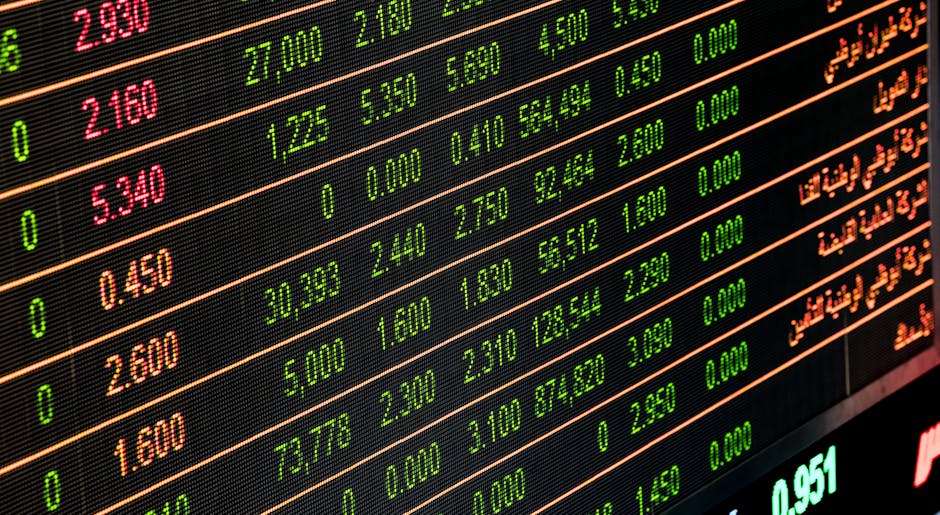
Photo by cliffsmith23 on Pixabay
Who's Affected: Micron Sits Directly in the Blast Radius
This matters for U.S. investors because Micron Technology is the only major American player in the same HBM and DRAM market that Samsung and SK Hynix are currently squeezing. When Korean memory makers can raise HBM3E prices by double digits and still sell out capacity years ahead, that's pricing power Micron inherits by proxy — tight global memory supply lifts contract prices for everyone in the trade, not just the two Korean suppliers. I dug into this dynamic in more depth in Korea's Chip Export Boom Puts Micron's Pricing Power to the Test, and this week's export print is the clearest confirmation yet that the shortage narrative is intensifying rather than fading.
The knock-on effect showed up in the SOXX semiconductor index too. Chipmakers were already attempting to recover from a rough prior week, with Teradyne and Astera Labs among the names bouncing alongside Micron. That said, the 50-day rolling volatility on SOXX has climbed to its highest level since May 2020, a reminder that AI-adjacent, higher-beta names like Micron are swinging harder in both directions as investors weigh genuine demand growth against stretched valuations.
There's a macro layer here too: the Bank of Korea just ended a three-year rate freeze, hiking its policy rate 25 basis points to 2.75% — its first hike since January 2023 — with the AI chip boom cited as a factor stoking inflation pressure. That's a signal the AI memory supercycle is showing up in national economic data, not just equity charts.
What to Watch Next
Three things worth tracking from here. First, whether Samsung and SK Hynix follow through on the reported HBM3E price hikes for 2026 contracts — if confirmed, that's a direct read-through to Micron's own pricing leverage in its next earnings commentary. Second, keep an eye on SOXX volatility: a 50-day realized vol spike this high means single-stock moves in Micron, Nvidia, and peers can be larger and faster than the index headline suggests. Third, watch whether Korean export strength in the back half of July holds up, since one strong 20-day print doesn't confirm a trend on its own — a second consecutive month of record semiconductor exports would be a stronger signal that the memory shortage, not just a rebound trade, is the dominant story.
None of this guarantees Micron or any other U.S. chip name moves in lockstep with Korean equities — Kospi sidecars are a domestic market mechanism, not a U.S. trading signal. But the underlying export and pricing data coming out of Korea is about as close to real-time evidence of global memory chip demand as investors get, and it's currently pointing toward continued tightness rather than relief.
This is not financial advice — always do your own research before making investment decisions.
The Takeaway
The Kospi's 3.56% surge and its buy-side sidecar are the visible, headline-grabbing part of the story. The less visible but arguably more important part is the export data underneath it: record semiconductor shipments, an HBM market running near capacity, and two Korean suppliers with enough pricing power to raise prices and still sell out. For anyone tracking Micron or the broader U.S. memory trade, that's the number worth watching — not the index close.


댓글
댓글 쓰기