Kospi's Record Rebound Just Smashed Its 2008 Crisis-Era High
What happened
The Kospi opened July 31 already firm and kept accelerating, hitting an intraday high of 6,548.64 before settling with a gain north of 13.9% to close near 6,371.98, according to Financial News (fnnews.com). The move was violent enough to trigger the year's largest "buy-side" sidecar, a mechanism that briefly pauses program trading when index futures swing too far too fast.
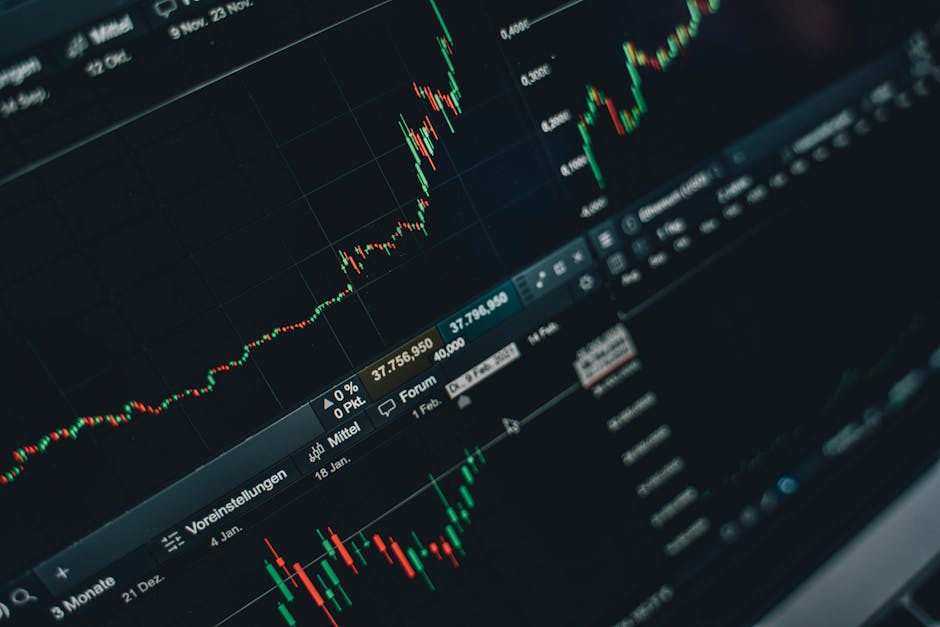
Photo by Alesia Kozik on Pexels
The turnaround is jarring given where the market stood just days earlier. July as a whole had been the worst month in Kospi history, with the index down roughly 28-33% from its June all-time high near 9,385 — a decline steeper than both the 1997 Asian Financial Crisis (down 27%) and the 2008 Global Financial Crisis (down 23%), driven by a violent unwind of leveraged bets tied to Korea's AI chip champions, Samsung Electronics and SK Hynix.
Why it matters — the market reaction
Mirae Asset Securities pointed to a recovery in AI investment sentiment following strong earnings from U.S. mega-cap tech companies as the trigger for the rebound, with semiconductor names leading the charge. That read-through matters directly for U.S. investors: as I covered in Microsoft's $485 Billion Day Sparks a 2.8% Nasdaq Rally, strong hyperscaler results have been the swing factor for chip sentiment on both sides of the Pacific this earnings season.
New single-stock leverage regulations also took effect in Korea on July 31, which analysts flagged as a factor curbing the kind of forced margin-call selling that had accelerated the prior crash. Samsung Electronics and SK Hynix both opened premarket up roughly 3% and extended gains through the session. The rally got an additional jolt in the afternoon when institutional buyers, including pension funds, stepped up purchases around a government-hosted "national leap" investment forum, with reports pointing to a combined roughly 2,000 trillion won ($1.4+ trillion) in planned decade-long investment tied to the two chipmakers and their supply chain.

Photo by PublicDomainPictures on Pixabay
Who's affected
- Samsung Electronics and SK Hynix — the epicenter of both the crash and the rebound, given their outsized weight in the Kospi and their central role in the memory-chip AI supercycle.
- U.S. memory and AI-chip names — Micron Technology, which trades in close sympathy with SK Hynix on memory-pricing sentiment, is the most direct U.S. read-through. I detailed the mechanics of that linkage in Micron's Down 31%. History Says the Drawdown Isn't Over Yet and in SK Hynix Posted a Record 76% Margin. Micron Fell 22% Anyway.
- Korea-linked ETFs — funds tracking the Kospi or MSCI South Korea, which had absorbed heavy outflows during the drawdown, are the most direct U.S.-listed vehicle for this swing.
- Broader AI supply chain stocks — semiconductor equipment, materials, and component suppliers tied to Samsung's and SK Hynix's capex plans stand to benefit if the announced investment wave materializes.
What to watch next
The core question is whether this is a durable inflection or a violent short-covering bounce inside a still-unresolved deleveraging event. Foreign investors had been net sellers of roughly $108 billion in Korean equities over the preceding stretch, and a single record-setting session doesn't undo that positioning on its own. Watch whether:
- Samsung and SK Hynix hold their gains over the following sessions rather than giving them back, which would suggest the forced-selling phase is genuinely exhausted rather than pausing.
- U.S. memory-chip names like Micron confirm the move with their own follow-through, since a Kospi rebound that isn't echoed in Micron's price action would suggest the bounce is more about Korea-specific mechanics (leverage rules, pension buying) than a broader AI-chip sentiment reset.
- Circuit breakers or sidecars trigger again in either direction — a market swinging between historic drops and historic rebounds within the same week is still a market in a highly unstable regime, not one that has found its footing.
This ties back to what I flagged in Kospi Soars 14%, Triggers Circuit Breaker on Chip Rebound: violent two-way volatility, not calm recovery, has been the defining feature of this chip-cycle unwind, and a record one-day gain sitting right next to a record one-month loss is the clearest evidence yet of just how unsettled the underlying positioning still is.
This is not financial advice — always do your own research before making investment decisions.
Takeaway
A record-breaking rebound that erases part of a record-breaking crash is a genuinely notable market event, but it's not proof the storm has passed. The scale of the swing — from IMF-crisis-level losses to a rally bigger than 2008's currency-swap bounce, in the span of days — says more about how leveraged and fragile the positioning around AI chip stocks has become than it does about the fundamentals of Samsung, SK Hynix, or their U.S. peers. Investors watching Micron, Nvidia, or Korea-linked ETFs should treat this as one volatile data point in an unresolved deleveraging story, not a signal that the turbulence is over.


댓글
댓글 쓰기