Microsoft's Record Rally Left Short Sellers Reeling
Microsoft's stock didn't just beat earnings on Thursday — it triggered the single largest one-day market-cap gain any company has ever recorded, and the fine print shows the move was as much about crushing bears as it was about rewarding bulls.
What Happened
Microsoft shares closed up roughly 16% Thursday, their best day since October 2008, after fiscal fourth-quarter revenue came in at $90 billion, up 18% year-over-year and well ahead of the $87.62 billion Wall Street was expecting. Diluted EPS jumped 32% to $4.81. The number that moved the stock was Azure: cloud revenue growth accelerated to 43%, up from 40% the prior quarter, and Azure crossed $100 billion in annual revenue for the first time. Microsoft Cloud revenue overall hit $59.3 billion, up 27%, while commercial remaining performance obligations — essentially Microsoft's backlog of signed-but-unbilled contracts — jumped 84% to $678 billion. Management then guided for 45% constant-currency Azure growth next quarter, above the roughly 41% analysts had modeled.
As I covered in Microsoft's $485 Billion Day Sparks a 2.8% Nasdaq Rally, the headline gain — north of $450 billion in a single session — eclipsed Nvidia's previous record of roughly $441 billion set on April 9, 2025, when markets rallied on a tariff pause.
Why It Matters: The Short Squeeze Nobody's Talking About
Here's the part that gets buried under the headline number: Microsoft went into this print as one of the most-shorted mega-cap names in years, with bearish bets against the stock climbing to their highest level in more than a decade. That matters because Microsoft had lagged its "Magnificent Seven" peers for most of 2026, down more than 18% heading into Wednesday's close, and a growing chorus of skeptics had bet the AI capex spending spree wouldn't show up in the numbers.
It showed up. And when a heavily shorted mega-cap gaps up 16% on massive volume, the move isn't just buyers stepping in — it's short sellers scrambling to cover losing positions, which mechanically adds fuel to the rally. That dynamic helps explain why the gain was this violent rather than a more measured re-rating.
Wall Street's response was immediate. Evercore ISI raised its price target to $528, Wolfe Research went to $550 citing Azure's acceleration, and Wedbush's Dan Ives — who had already lifted his target to $600 from $515 before the print — called the report the "most important" of the entire earnings season for gauging enterprise AI adoption, describing Azure's growth as the clearest barometer of whether companies are actually paying for AI or just talking about it.

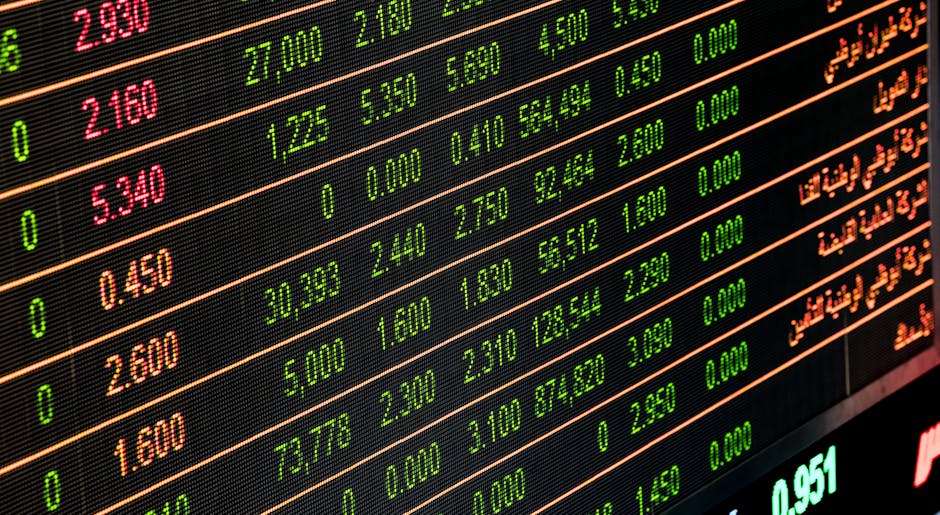
Photo by QuinceCreative on Pixabay
Who's Affected: A Tale of Two Hyperscalers
The most telling data point isn't Microsoft's gain — it's what happened to Alphabet the same week. Google shares fell roughly 6% after Alphabet raised its capex outlook to $205 billion, spooking investors who worried about spending discipline. Microsoft delivered accelerating growth without a matching capex shock, and the market rewarded the contrast directly: capital efficiency, not just AI exposure, is now the variable being priced. That split builds on the theme I explored in Microsoft and Meta Both Bet Big on AI. Wall Street Picked a Winner — investors are no longer rewarding AI spending uniformly; they're differentiating hard based on whether that spending is converting into revenue.
The ripple effects extend beyond the two companies directly. Enterprise software and cloud-infrastructure names that ride on Azure's coattails — data center REITs, networking suppliers, and AI chip providers tied to hyperscaler capex — got a read-through boost. Semiconductor suppliers exposed to Microsoft's infrastructure buildout are worth watching in the sessions ahead, since Azure's reacceleration is effectively a demand signal for the entire AI supply chain.
What to Watch Next
- Amazon's earnings: AWS growth will be measured directly against Azure's 43% pace. If AWS reaccelerates too, this stops looking like a Microsoft-specific story and starts looking like confirmation that enterprise AI spending is broadly real.
- Short interest unwind: Whether bearish positioning continues to unwind in the coming sessions, or whether shorts re-establish positions at these higher levels, will say a lot about whether Thursday's move sticks.
- Capex discipline versus growth: Watch whether Microsoft can sustain 40%+ Azure growth without capex creeping toward Alphabet's levels — that balance is now the metric the market is explicitly pricing.
- Follow-through in the Nasdaq: Whether the broader AI trade extends or whether this proves to be a single-stock, single-day event isolated to Microsoft's specific setup.
The Takeaway
Thursday's move was real and the underlying numbers back it up — Azure's acceleration and the backlog growth are concrete, not sentiment-driven. But a chunk of the size of the move came from a mechanical short squeeze layered on top of a genuine beat, which means some of the 16% pop reflects positioning unwinding rather than a full re-rating of Microsoft's long-term value. The next few weeks — starting with Amazon's AWS numbers — will separate the durable story from the one-day event.
This is not financial advice — always do your own research before making investment decisions.


댓글
댓글 쓰기