Oil Jumps 2% as Houthis Blockade Saudi Arabia, Trump Rebuffs Iran Talks
Oil prices jumped to a five-week high on Tuesday after Yemen's Iran-aligned Houthi movement declared a naval blockade against Saudi Arabia, and President Trump said the U.S. has "no interest" in immediate talks with Iran even as tankers began turning back in the Red Sea.
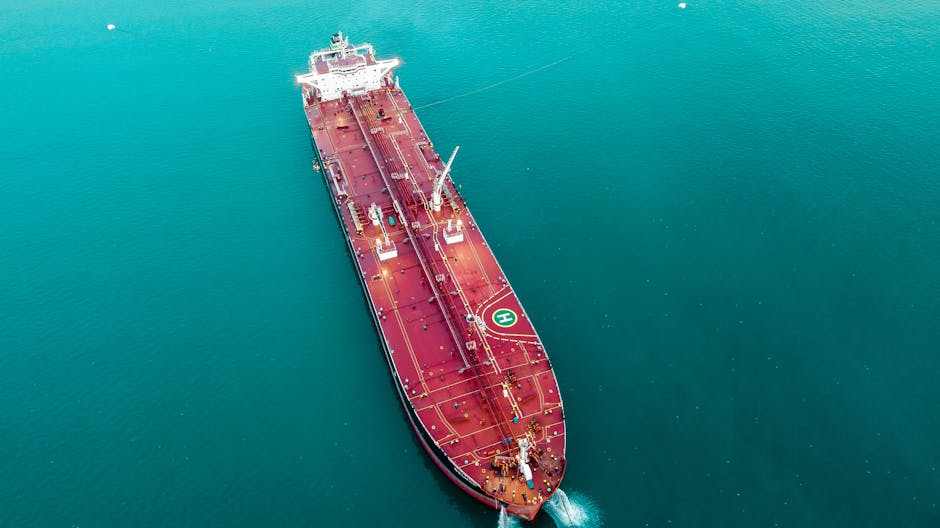
Photo by Alexander Bobrov on Pexels
What Happened
Yemen's Houthis announced on Monday, July 20, that they would impose a maritime blockade on Saudi Arabia, saying vessels servicing Saudi ports would no longer be permitted safe passage through the Bab el-Mandeb Strait, the narrow chokepoint nicknamed the "Gate of Tears" that connects the Red Sea to the Gulf of Aden. Houthi spokesman Yahya Sarea called it retaliation, "an eye for an eye," for Saudi actions against Yemeni ports and airstrikes including one on Sanaa International Airport.
The threat wasn't theoretical for long. Two tankers carrying Saudi crude bound for China and India made U-turns in the Red Sea on Tuesday and redirected toward the Suez Canal rather than risk the Bab el-Mandeb passage.
Asked about the standoff, Trump downplayed the odds of near-term negotiations with Tehran, telling reporters the U.S. has handled Houthi threats before: "So far, it hasn't happened. Might happen. But we take care of things. If something like that happens, we take care of it. We've done that with the Houthis before, and we haven't heard from them in a while." He separately warned the group he would order strikes if the blockade is actually enforced.
Market Reaction So Far
Crude climbed roughly 2% on the news. Brent futures rose $1.83, or 2.1%, to $91.05 a barrel, while U.S. West Texas Intermediate gained $1.92, or 2.3%, to $85.15 — both marking their highest closes in about five weeks. The move reflects fears that Saudi Arabia's Red Sea export route via Yanbu, already leaned on more heavily as an alternative to the Strait of Hormuz, could now be choked off too, leaving the kingdom with fewer safe paths to move crude to Asia.
ExxonMobil (NYSE: XOM), Chevron (NYSE: CVX), and BP (NYSE: BP) all ticked higher in pre-market trading as the oil-price spike flowed straight into integrated major valuations.

Who's Affected
- Integrated oil majors (XOM, CVX, BP) — direct beneficiaries of higher crude realizations if the risk premium holds.
- Tanker and shipping operators — rerouting around the Cape of Good Hope instead of Suez/Bab el-Mandeb lengthens voyages and tightens vessel supply, a dynamic that historically lifts spot freight rates.
- Airlines and other fuel-intensive industrials — a sustained move above $90 Brent pressures jet fuel costs and margins.
- Broader risk sentiment — this escalation lands on top of an already-tense U.S.-Iran conflict now in its tenth day, with mediators pushing for a ceasefire even as strikes continue.
What to Watch Next
The near-term signal to track is whether the blockade moves from declaration to enforcement — the two tankers that already diverted suggest shippers aren't waiting to find out. A confirmed Saudi supply disruption, rather than just the threat of one, is what would push crude meaningfully past the $91-92 Brent level seen this week. Also watch for any U.S. military response if Trump follows through on his strike warning, and whether the ceasefire push tied to the broader U.S.-Iran conflict gains traction — a de-escalation there would likely take pressure off the Red Sea route as well.
This is not financial advice — always do your own research before making investment decisions.
Taken together, this is a fast-moving geopolitical story where the oil-price and energy-stock reaction has outpaced any actual supply disruption so far — worth watching for confirmation of enforcement before assuming the risk premium is permanent.


댓글
댓글 쓰기