Your Leveraged ETF Can Lose Money Even When the Stock Wins
Here's a scenario that should worry anyone holding a leveraged ETF: the underlying stock goes up on the day, and your "2x" or "3x" fund still ends up red. That's not a glitch. It just happened in Korea, where SK Hynix shares rose during Tuesday's session while the leveraged ETF tracking it fell — and it's the exact same math that quietly eats returns in popular US products like SOXL, TSLL, and NVDL.
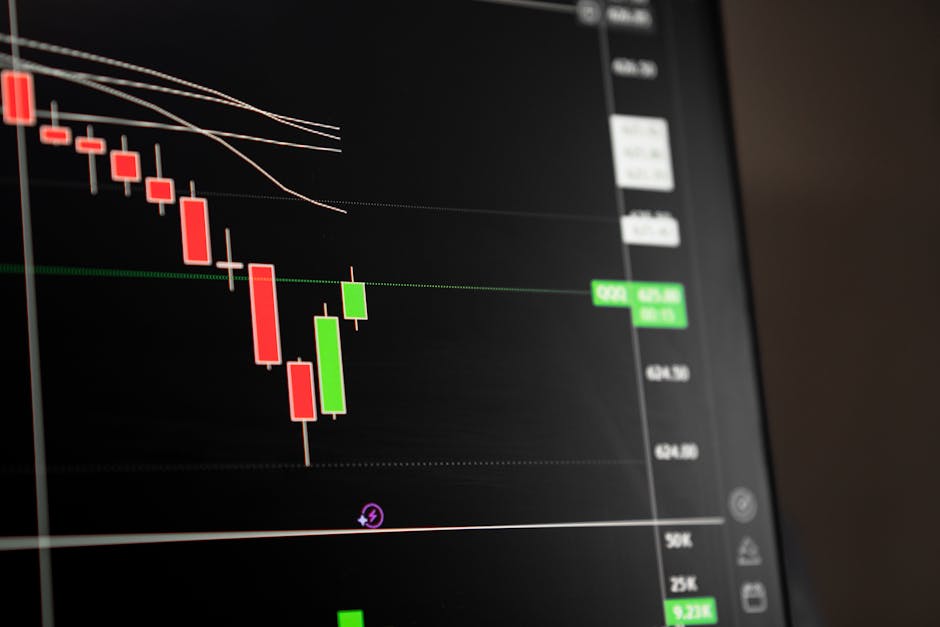
What actually happened with SK Hynix
SK Hynix reported record profit this week, then whipsawed violently through its own earnings day — which I covered in SK Hynix ADR Slides Into Its Biggest Earnings Day Yet. In the middle of that chaos, the stock itself ticked up intraday while the single-stock leveraged ETF built on top of it moved the other way. Retail investors, understandably, were confused. The fund is supposed to track the stock, amplified. How does it go down when the stock goes up?
The answer: leveraged ETFs don't track the stock's move from the day you bought it. They reset daily, amplifying only that day's return, and layer in intraday volatility drag, borrowing costs, and rebalancing friction that has nothing to do with the ETF issuer trying to rip you off — it's just what the product is engineered to do.
The scale of the damage in Korea
This isn't a rounding error. Korean retail investors poured roughly 14 trillion won (about $9.4 billion) into single-stock leveraged ETFs tied to Samsung Electronics and SK Hynix after they launched in late May, riding the AI and chip rally. When the rally reversed, one SK Hynix leveraged fund fell about 70% from its peak, and investors watched more than 8.8 trillion won — about $5.9 billion — evaporate in just nine trading days, according to CNBC's reporting on the fallout. Regulators responded fast: as I noted in Seoul's Regulators Move to Cap Leverage After Chip Crash, the minimum cash requirement to trade these products jumped from 3 million won to 30 million won almost overnight.
The math nobody explains before you buy
Volatility decay isn't a theory, it's arithmetic. Take a stock that goes up 10% one day and down 10% the next. The plain stock ends down 1% ($100 → $110 → $99). A 2x leveraged version of the same stock ends down 4% ($100 → $120 → $96), because the ETF resets its exposure every single day rather than compounding your original 2x bet.
- Regular stock, +10%/-10%: -1% net
- 2x leveraged version, same swings: -4% net
- 3x leveraged version, same swings: -9% net
And the decay isn't linear with leverage — it's worse than that. A 3x fund doesn't suffer 1.5 times the drag of a 2x fund; the drag scales with leverage squared minus leverage, so 3x funds bleed roughly three times harder than 2x funds in choppy markets, according to ETF.com's breakdown of decay mechanics. Chop is the enemy, not just decline.

This already happened to US traders — with real numbers
If the Korea story sounds abstract, look at what's already on the record for US single-stock leveraged products. Direxion's TSLL (2x Tesla) launched in August 2022 at $24.13 when Tesla traded around $283. Since then Tesla has gained roughly 33% — and TSLL is down about 50% from its launch price. Same direction, opposite outcome, purely because of daily reset math over a volatile stretch.
SOXL, the 3x semiconductor ETF, is the more brutal example: from December 2021 to October 2022, the unleveraged semiconductor index fell about 46%. SOXL over that same window fell about 90%, going from $70.86 to $6.76 on a split-adjusted basis, per 24/7 Wall St's analysis. That's nearly double the loss for triple the stated leverage, in a sector that's now back in the headlines thanks to the exact chip volatility I covered in Kospi's Worst Day Ever and the CXMT competitive threat.
What this means if you're holding NVDL, TSLL, or SOXL right now
These products aren't scams and they're not broken — they do exactly what their prospectus says. The problem is almost nobody reading a Robinhood or app ticker actually reads the prospectus. If you're holding one through a multi-week volatile stretch rather than trading it for a single session, you are structurally more likely to lose money than the underlying stock loses, even if you correctly predicted the stock's long-term direction.
Three questions worth asking before you buy or hold any of these:
- Am I holding this for one day, or for weeks? (These are built for one day.)
- Is the underlying stock currently choppy — big daily swings in both directions — rather than trending smoothly? (Chop is where decay compounds fastest.)
- Would I be equally comfortable buying calls or a smaller unleveraged position instead, with defined risk?
The takeaway
Korea's leveraged ETF blowup is a live case study playing out in real time with real dollar losses, and the mechanics are identical to what's already burned US retail investors in TSLL and SOXL. If you're holding a leveraged single-stock ETF past a day or two, pull up its actual chart against the underlying stock's chart over the last six months — not since you bought it, the full six months — and see how far they've already diverged. That gap is the cost of the product, and it only grows the longer you hold through volatility.
This is not financial advice — always do your own research before making investment decisions.


댓글
댓글 쓰기