Kospi Rips 4.4% to 7,096 as Alphabet's Capex Trade Overrides Wall Street's Selloff
South Korea's Kospi index closed up 4.40% at 7,096.89 on Thursday, its biggest single-day jump in months, as foreign investors extended a buying streak into a fourth straight session — even as the U.S. stock whose earnings triggered the rally, Alphabet, actually sold off back home.
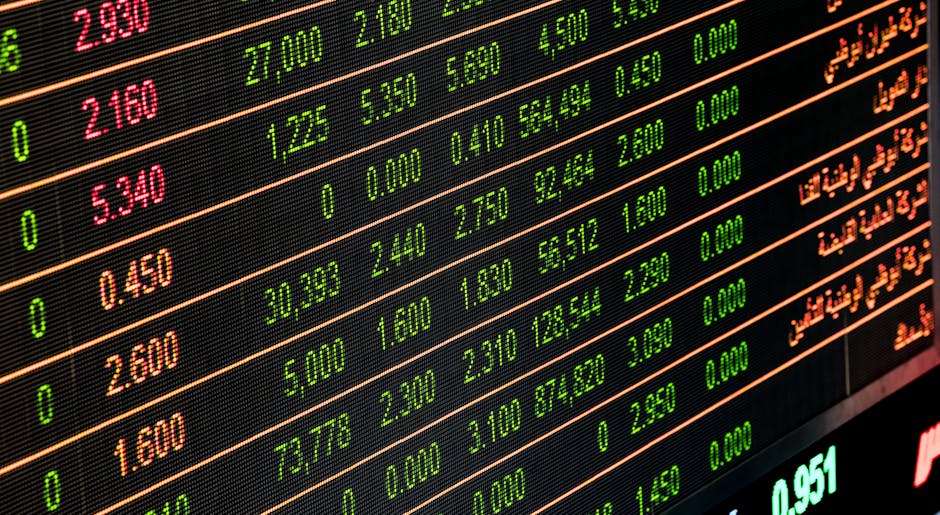
What happened
The Kospi gained 299.19 points to close at 7,096.89, retaking the 7,000 level and triggering a buy-side circuit breaker (사이드카) as the index accelerated during the session. Foreign investors were net buyers of roughly 2.1-2.6 trillion won on the day, according to Korea Exchange data, marking their fourth consecutive session of net buying after weeks of selling pressure. Chip stocks led the charge: Samsung Electronics closed up about 3.7% at roughly 270,000 won, while SK Hynix jumped 4.86% to 1,919,000 won.
The catalyst was Alphabet's second-quarter earnings, released after the U.S. close. Alphabet posted revenue of $119.8 billion, up 24% year-over-year, with Google Cloud revenue surging 82% to $24.8 billion and operating income up 30% to $40.8 billion. More importantly for Korean chipmakers, Alphabet raised its full-year 2026 capex guidance to $195 billion-$205 billion, up from the $180 billion-$190 billion it had guided just one quarter earlier, and warned that 2027 spending will "increase significantly." Cloud backlog climbed to $514 billion, and management said it remains in a "supply-constrained environment" with "very strong demand" from both external cloud customers and its own business.
Why it matters — a market reading the same headline two different ways
Here's the twist: Alphabet's own stock didn't celebrate the news. Free cash flow plunged to negative $5.9 billion as quarterly capex more than doubled to $44.9 billion, and GOOGL shares sank after hours as investors weighed the spending spike against near-term cash burn. As I covered in Alphabet Sinks 4% After Hours as AI Capex Spooks Wall Street, U.S. investors have been increasingly nervous about the AI capex arms race eating into profitability.
Seoul read the exact same numbers as a demand signal, not a cost problem. Higher Alphabet capex means more orders for HBM and DRAM from Samsung and SK Hynix, and foreign funds treated the guidance hike as confirmation that AI infrastructure spending isn't slowing — it's accelerating into 2027. That's consistent with the pattern I flagged in 'Thank You Alphabet': Kospi Reclaims 7,000 as Chip Stocks Surge and again in Foreign Funds Buy Korean Chips 4 Days Straight as Kospi Tops 7,000: the same capex line item that scares Wall Street's cash-flow models is what's dragging foreign capital back into Korean memory names.

Who's affected
- Samsung Electronics and SK Hynix — the direct beneficiaries, both up nearly 4-5% on the session as the primary suppliers of HBM to hyperscalers building out AI data centers.
- Alphabet (GOOGL) — beat on revenue and cloud growth but saw shares fall after hours on capex-driven cash flow concerns, a split reaction that's now playing out in real time across two different markets.
- U.S. semiconductor and AI infrastructure names — Alphabet's guidance hike reinforces the broader capex-cycle thesis that's been driving chip stocks for months, though U.S. investors have shown they'll punish the spending even while rewarding the demand story elsewhere.
- Korean equity funds broadly — the Kospi's move past 7,000 with a circuit-breaker-triggering rally signals that foreign positioning, not just retail momentum, is now driving the index.
What to watch next
The key question is whether foreign buying extends past a fourth day or fades once the initial reaction to Alphabet's numbers is priced in. Watch daily net foreign flow data from the Korea Exchange for confirmation, along with whether Samsung and SK Hynix can hold their gains without a fresh catalyst. On the U.S. side, watch how other hyperscalers reporting earnings in the coming weeks — Microsoft, Meta, Amazon — guide their own 2026-2027 capex, since a similar pattern (guidance up, stock down, Korean chip names up) would confirm this isn't a one-off Alphabet story but a sector-wide rotation.
This is not financial advice — always do your own research before making investment decisions.
The bigger picture: markets on two sides of the Pacific are pricing the same AI infrastructure spending cycle in opposite directions — as a margin risk in the U.S. and as a demand tailwind in Korea. Both readings can be correct simultaneously, which is exactly why this divergence is worth tracking rather than resolving in either direction just yet.


댓글
댓글 쓰기