Kospi's Record 18% Rally Doesn't Erase Its Worst Month Ever
South Korea's Kospi index just posted the single biggest one-day gain in its history — closing up 17.91% at 6,595.45, a jump of 1,001.89 points — with SK Hynix hitting its 30% daily limit for the first time in roughly 17 years and Samsung Electronics surging 26.81%, its biggest percentage gain on record. It's a stunning number. It's also, on its own, a misleading one.
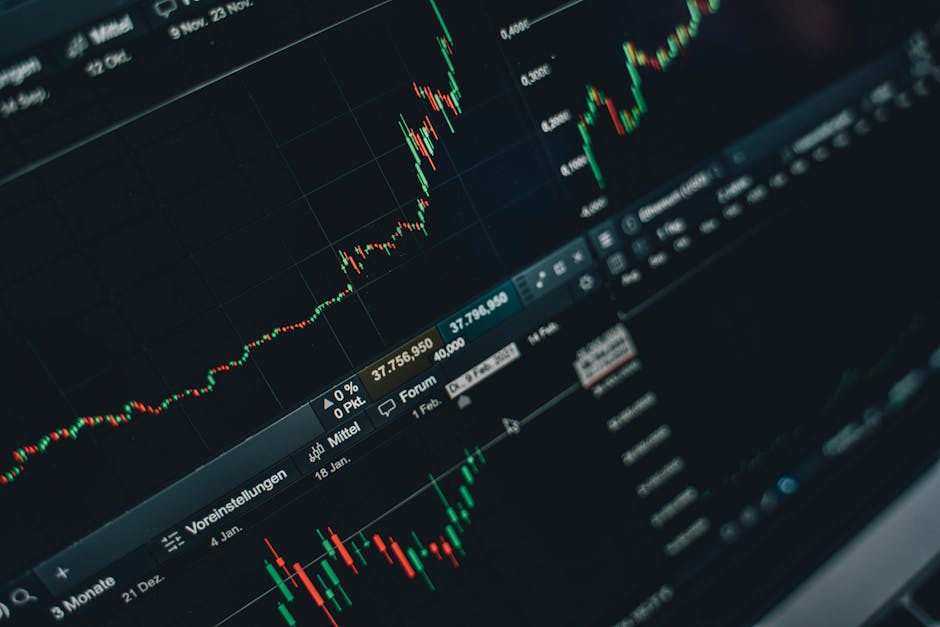
Photo by Alesia Kozik on Pexels
What Happened
SK Hynix closed at 1,718,000 won after rising the full 29.95% allowed in a single session, while Samsung Electronics jumped to 262,500 won. Both moves were records for each stock individually, not just for the index. The rally was broad enough to lift the entire market: foreign investors poured in with net buying, and the point gain alone — over 1,000 points in a single session — has never happened before in Kospi history.
The trigger was overnight strength out of Wall Street. Microsoft shares jumped 15.5% after Azure cloud revenue grew 43% for the quarter, and Amazon separately confirmed robust AI infrastructure demand extending into 2027. That combination eased fears that AI-driven chip demand was cooling, which is exactly the fear that had hammered Samsung and SK Hynix in the days before — Samsung alone had fallen 19.34% over the three prior sessions.
Why It Matters: The Month Nobody's Celebrating
Here's the number that got buried under Thursday's headlines: the Kospi hit an all-time high of 9,385.59 on June 19. By late July, the index had cratered as much as roughly 30% from that peak, on its way to what multiple market reports describe as its worst monthly performance on record — worse than the 1997 Asian financial crisis (-27.25% in October 1997) and worse than the 2008 global financial crisis (-23.13% in October 2008). Thursday's 17.91% bounce, as historic as it is, still leaves the index well below where it stood a month ago. As I noted in Kospi's 17.91% Record Rally: Foreigners Bought, Retail Had Already Sold, the investors buying this specific bounce were mostly foreign funds — not the retail traders who had already exited near the bottom.
That gap between "biggest day ever" and "still down big for the month" is the actual story. A single green session, however record-breaking, is a data point — not proof the selloff is over.

Photo by Quanlecntt2004 on Pixabay
Who's Affected
The most exposed group isn't institutional. It's Korea's retail investors who leaned into leveraged, single-stock ETFs tracking Samsung and SK Hynix during the June boom. Outstanding margin loans in the Korean market had swelled to a record roughly 29.2 trillion won, much of it concentrated in those leveraged products. When the chip rout hit in July, the mechanics of leveraged ETFs — which must sell more as prices fall to maintain their target leverage ratio — turned a decline into a feedback loop. Reports put forced liquidations tied to that unwind at roughly 2.3 trillion won over a span of about two and a half months. Thursday's rally helps those positions, but it doesn't undo the damage already realized by investors who were liquidated on the way down.
Beyond leveraged-ETF holders, the direct beneficiaries of the bounce are Samsung Electronics and SK Hynix themselves, along with the broader Korean semiconductor supply chain that rises and falls with sentiment on AI memory demand — a dynamic I covered in SK Hynix Hit a Limit It Hasn't Touched Since 2009 — Now What?. U.S. megacap names tied to the same AI infrastructure narrative, including Microsoft, also matter here since Thursday's Azure beat is what reignited the buying in Seoul in the first place.
What to Watch Next
The key question isn't whether Thursday was real — it was, and it's now a permanent line in Kospi's record book. The question is whether foreign buying continues into next week or fades once the immediate earnings catalyst is digested. Watch three things: whether SK Hynix and Samsung can hold Thursday's gains without giving them back in the next session or two, whether margin and leveraged-ETF exposure starts rebuilding at the same pace it did during June's run-up, and whether upcoming U.S. megacap earnings keep confirming AI capex strength or start showing any hesitation. A single record day changes sentiment fast; it doesn't by itself repair a month that Korean markets are already calling one of the worst on record.
This is not financial advice — always do your own research before making investment decisions.
Takeaway: Thursday's rally was genuinely historic — the biggest single-day point and percentage gain the Kospi has ever recorded, driven by real earnings catalysts out of the U.S. But a record bounce off a deep hole is still a hole. Investors chasing this move should weigh the size of July's drawdown, and the leveraged-ETF mechanics that amplified it, against the size of one very good afternoon.


댓글
댓글 쓰기