Kospi Finally Holds 7,000 After Two Failed Runs This Week
South Korea's Kospi closed above 7,000 on Thursday, July 23 — and this time it actually stuck. The index jumped 4.40% to 7,096.89, its highest close in five trading sessions, after Alphabet's blowout earnings and a raised AI capex forecast reignited chip stocks across Asia. What makes this hold different is what happened the two prior times this week the index tried to clear the same level and failed.
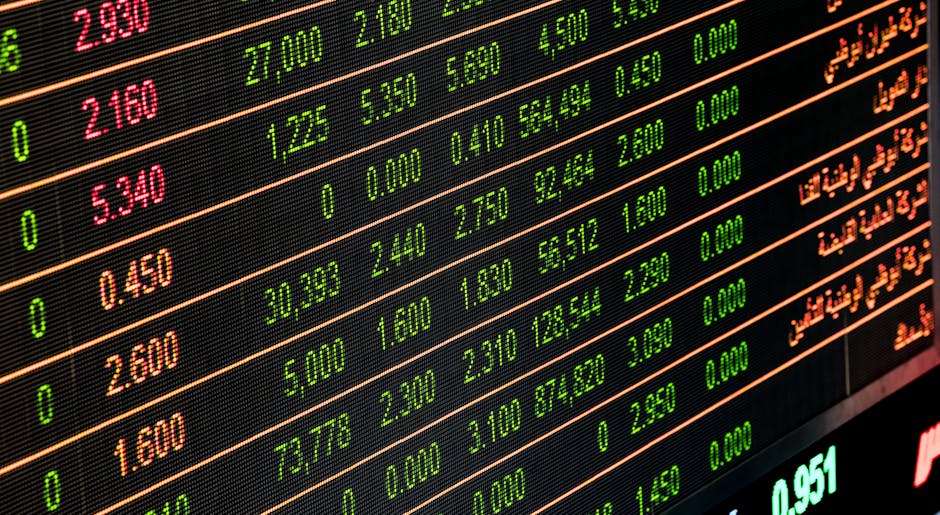
What happened
Thursday's close of 7,096.89 marked the first time the Kospi has held the 7,000 line since July 15, when it touched 7,284.41 before sliding back. In between, the index whipsawed twice: a buy-side circuit breaker (sidecar) was triggered on July 22 as Samsung Electronics and SK Hynix ripped higher intraday, but the rally faded by the close and the index finished at just 6,797.70, up a modest 0.74%. Before that, the Kospi had briefly spiked as much as 4.51% at the open on other sessions this week only to give most of it back by afternoon trade.
Thursday broke that pattern. Samsung Electronics gained roughly 3.65% and SK Hynix jumped about 4.86%, and — critically — the gains held into the close rather than evaporating in the afternoon session, as I covered when the index first ripped 4.4% to 7,096 on the Alphabet capex trade.
Why it mattered this time
The trigger was Alphabet's second-quarter report: revenue of $119.8 billion, up 24% year-over-year, with Google Cloud growing 82%. Alongside the print, Alphabet raised its 2026 capital expenditure guidance to a range of $195 billion to $205 billion, up from the prior $180 billion-$190 billion forecast — a signal that hyperscaler AI infrastructure spending isn't slowing, which flowed directly into demand expectations for Korean memory chips.
UBS added a supportive read on the recent chip-sector selloff itself, arguing it stemmed from large-scale hedge fund position unwinding rather than any deterioration in fundamentals, and that most of that supply-side selling pressure has now been worked through. That thesis lines up with the earlier failed attempts to hold 7,000 this week: sharp opening spikes followed by afternoon fade look consistent with a market still absorbing forced selling, not one being deliberately bid up by conviction buyers — until Thursday's close suggested that absorption is largely done.

Photo by ElasticComputeFarm on Pixabay
Who's affected
Samsung Electronics and SK Hynix, the Kospi's two largest constituents, drove essentially all of Thursday's move, extending a rebound that ties into the broader foreign-buying trend I detailed in Foreign Funds Buy Korean Chips 4 Days Straight as Kospi Tops 7,000. Samsung closed the prior session at 260,500 won and SK Hynix at 1,830,000 won before Thursday's jump. Beyond the two chipmakers, the move has implications for U.S.-listed memory and AI-infrastructure names with exposure to the same Alphabet capex cycle — DRAM and HBM suppliers, foundry equipment makers, and the broader semiconductor supply chain that reacted to the same earnings print.
Wall Street sell-side is split on how far the move goes. Citi has kept a 10,000 year-end Kospi target, arguing headwinds have peaked and citing a market-friendly policy mix, while Morgan Stanley — after the two-week U-turn from a sell call to a buy call — has kept its own target at 9,000. Both are calling a bottom; neither is calling this move finished.
What to watch next
The immediate test is whether Thursday's close holds through the next session rather than repeating the intraday-spike-then-fade pattern seen twice already this week. A close back below 7,000 on Friday would suggest the rally is still fragile positioning-driven noise rather than a durable trend change. SK Hynix's upcoming earnings will be the next fundamental data point — if HBM and DRAM guidance confirms the demand story implied by Alphabet's raised capex, that removes one of the biggest lingering doubts about whether chip fundamentals actually support the bounce. Beyond that, watch whether foreign net buying — which has now run multiple sessions in a row — continues, since it has been the dominant force behind every leg of this week's rebound.
This is not financial advice — always do your own research before making investment decisions.
The Kospi's ability to actually close above 7,000, rather than just touch it and retreat, is a meaningfully different signal than what the index produced twice earlier this week. Whether it's the start of a sustained trend toward Citi's 10,000 target or another false start depends heavily on whether Samsung and SK Hynix earnings confirm the AI-demand story Alphabet just reinforced.


댓글
댓글 쓰기